
Window Treatment Takeoffs: Commercial vs. Residential – What's the Real Difference?
When it comes to window treatments, one size definitely doesn’t fit all—especially when you're comparing commercial and residential takeoffs. Whether you're a designer, installer, or GC navigating both worlds, understanding the nuances can save you from costly mistakes and time-consuming rework.
Let’s break down the key differences, unique challenges, and specialized requirements of each. We’ll keep it casual—because, let’s be real, we all prefer plain English over construction jargon!
🏢 Commercial Take-offs: Big Scope, Big Stakes
Key Differences:
Scale & Volume: Commercial projects often involve dozens, if not hundreds, of windows. Think office buildings, hospitals, hotels, and schools.
Specs & Compliance: You're dealing with architects, spec sheets, safety codes, and tight tolerances. Missing one detail can throw the entire bid off.
Product Variety: Commercial jobs often require fire-rated fabrics, motorized shades, or energy-efficient solutions.
Unique Challenges:
Blueprint Reading: These projects usually start with full-blown construction plans. You’ll need to navigate elevations, reflected ceiling plans, and schedules like a pro.
Coordination Chaos: Working with general contractors, subcontractors, and building managers can be tricky. Delays and changes are the norm.
Time Crunch: Deadlines are tight. You’re often the last step before occupancy, so pressure is high.
Specialized Requirements:
Precise Take-off Software: Manual counting? No thanks. Commercial work demands tools that integrate CAD, laser measurements, and digital annotations.
Compliance Knowledge: Knowing fire codes, ADA requirements, and light control standards is a must.
Professional Reporting: Your take-off needs to be clean, clear, and presentable for stakeholders and procurement teams.
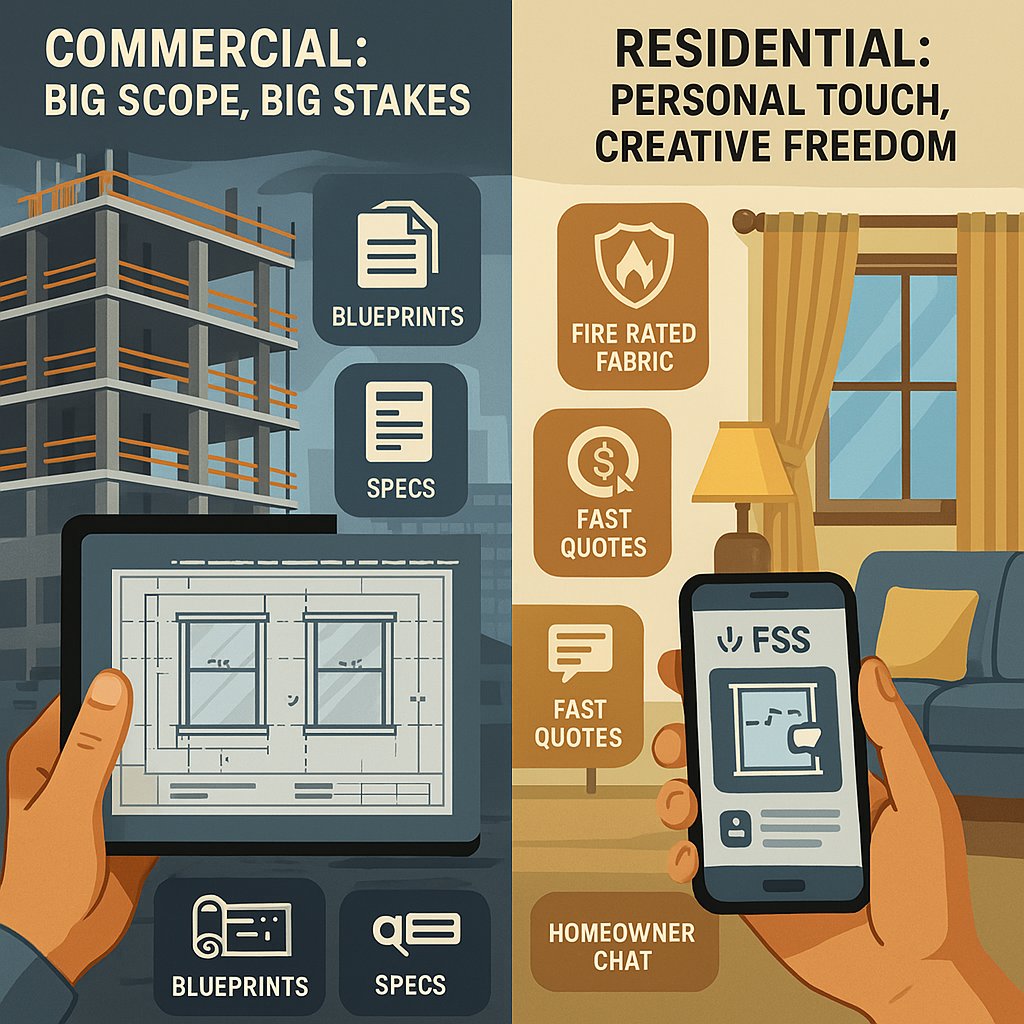
🏡 Residential Take-offs: Personal Touch, Creative Freedom
Key Differences:
Customization Over Quantity: It’s about finding the perfect shade or drape for one room, not 100 windows.
Client Communication: You’re working directly with homeowners, which means balancing style, budget, and personal preferences.
Design-Centric: More emphasis is placed on aesthetics, color coordination, and functionality.
Unique Challenges:
On-Site Variability: Every home is different—older homes especially can have quirky window dimensions, trim issues, or layout constraints.
Emotional Investment: Homeowners can be emotionally attached to their space. Expect revisions and lots of opinions.
Product Selection Overload: Clients often need help navigating fabric samples, lift options, and tech (hello, motorized shades!).
Specialized Requirements:
Mobile-Friendly Tools: Being able to measure, snap photos, and record notes on-site with a mobile app (like FSS Window Pro, wink wink) is a game-changer.
Quick Turnaround: Homeowners want answers fast—your quote needs to be accurate and ready to go.
Style Guidance: Having a basic understanding of interior design helps tremendously when making recommendations.
Final Thoughts
While both residential and commercial take-offs serve the same goal—getting accurate window measurements and specs—the approach is vastly different. Commercial is all about scale and precision, while residential thrives on customization and relationships.
At FSS, we offer flat-rate commercial takeoffs for just $45/hour, delivered fast and by experts who understand the stakes. Whether you’re bidding a multi-story office or helping a homeowner block out some Texas sun, we’ve got your back.
👉 Ready to make your next take-off stress-free? Get started with our team today!